Inside the show
Shinjuku sumo show: what to expect
What happens in the Shinjuku sumo show from the front door to the photographs: the MC, shiko and salt, sparring bouts, the lottery for the ring, and paying.
Book the Shinjuku sumo show ↗Quick answer
The show runs 75 minutes to 1.5 hours. An English-speaking MC introduces sumo, professional wrestlers demonstrate shiko and salt throwing and then spar in live bouts, and up to six guests per show, chosen by lottery, can try the ring. Pictures with the wrestlers are included. Enter through the front door beside the Daiso store, arrive on time because late entry may be refused, and bring a card because the event is cashless.
How the show is put together
The organiser's sequence runs like this. An MC opens with an introduction to sumo, in English. Wrestlers then show techniques and rituals and move on to live sparring, with the MC filling in history and background between bouts. Once the matches are over, a handful of guests go into the ring to face a wrestler. Photographs with the wrestlers come with the ticket. Your confirmation gives the start time for your date, and the show takes 75 minutes to 1.5 hours in all, which makes it easy to fit around a Tokyo day. Nothing in the format needs preparation. You do not need to know sumo beforehand, because the MC covers the history and background.
Finding the door and the meeting point
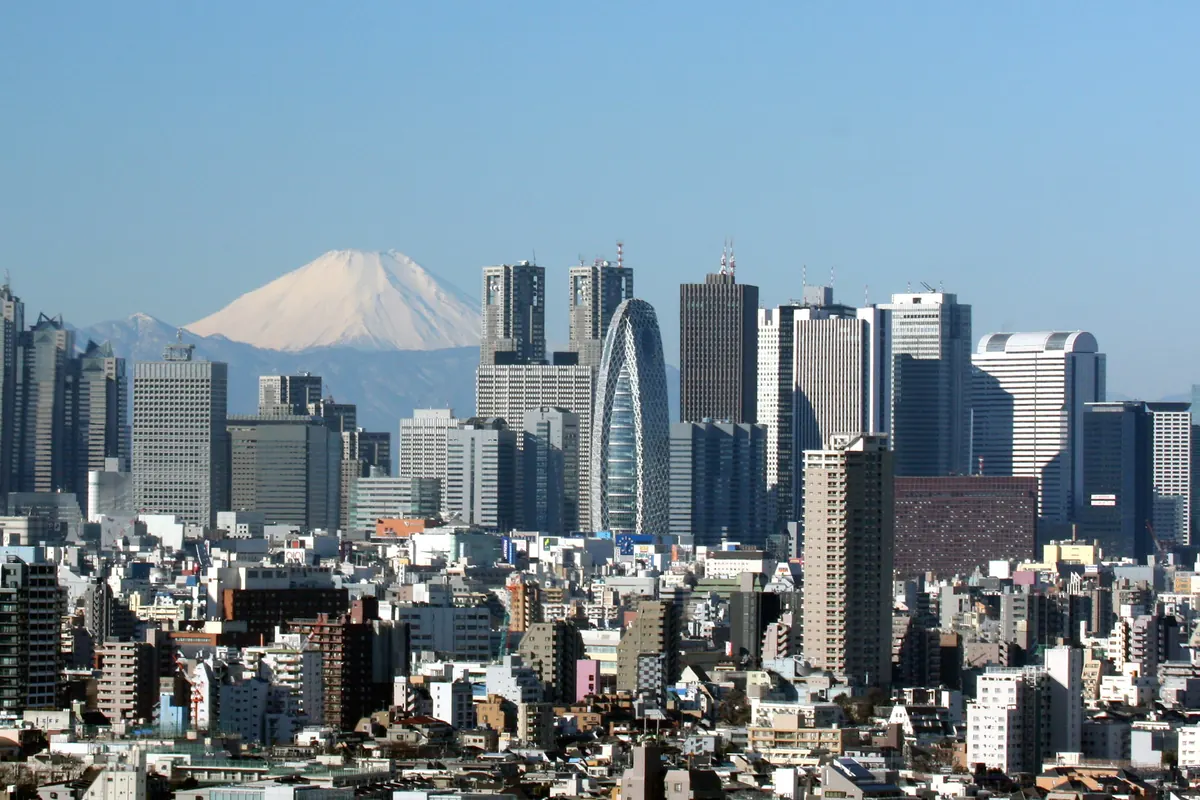
Two meeting points exist, and your option decides which one applies, so read your confirmation before leaving. Guests must enter through the front of the building, the side facing the main door next to the Daiso store. The show follows a time schedule, which is why the front desk may not accept late entry. Shinjuku is busy, and its main station is the one Guinness World Records has registered as the world's busiest, so leave yourself time to find the door.
The MC and the welcome drink
An English-speaking MC runs the show and explains it as it goes, with stories behind the rituals. The ticket includes a welcome drink, which is bottled water, and history and background information about sumo. If you know nothing about the sport, the commentary is what makes the bouts readable. If you know a lot, the question-and-answer session that reviews mention is where you get the most out of the hour, so bring a question about how wrestlers train or how the ranks work. Guests' reviews often name the MC and the wrestlers as the reason the hour works.
Shiko: the leg stomp
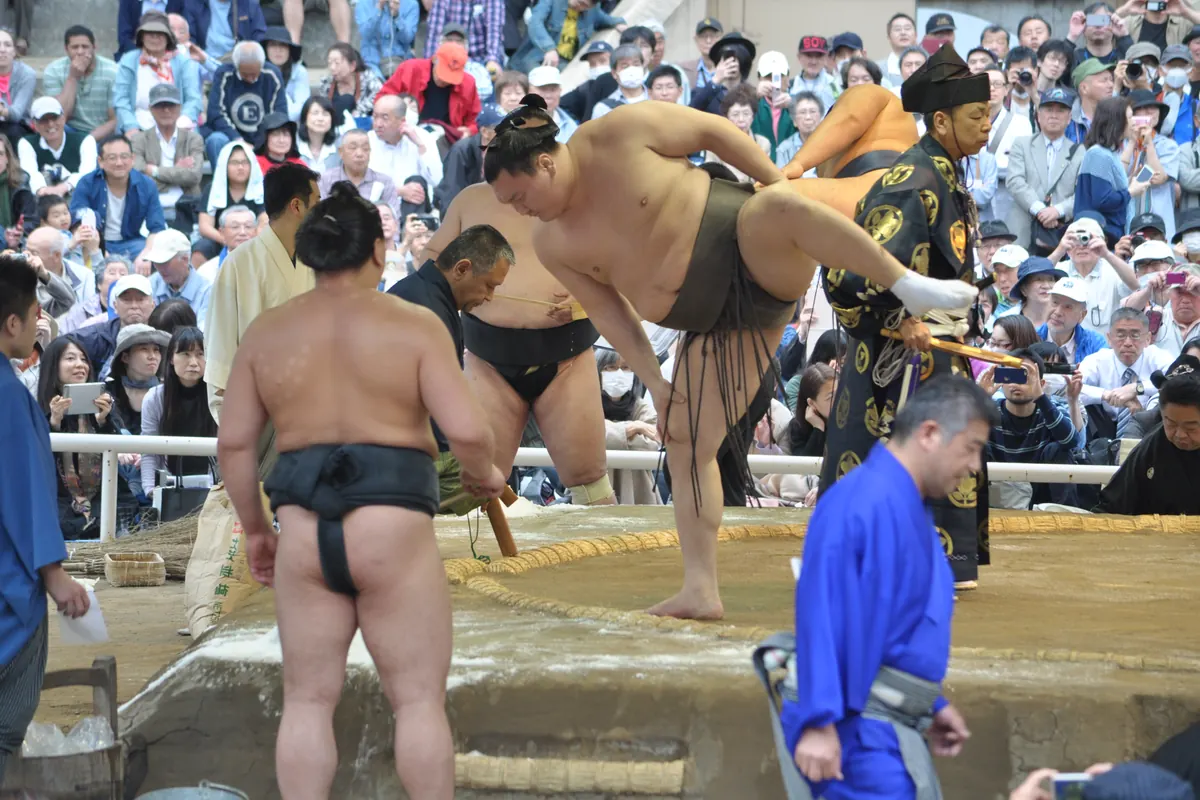
Shiko is a sumo exercise in which each leg is lifted as high and straight as possible, then stomped down with force. In training it may be repeated hundreds of times. Wikipedia's glossary adds that it is also performed ritually, to drive away demons before bouts. When the wrestlers do shiko in the Shinjuku show, you are watching a training exercise and a ritual at once, which is why the MC's explanation is worth hearing.
Salt, and why it flies
Before a bout, wrestlers throw handfuls of salt into the ring. Wikipedia describes this as a symbolic cleansing of the ring, and an article on sumo's Shinto origins says throwing salt before a bout is believed to purify it. The glossary adds that it is believed to cleanse bad energy and guard against injury. In the show, salt throwing is one of the two rituals the organiser names, alongside shiko, so you are likely to see both within a few minutes of each other.
Read next: Sumo rituals, explained before a show
Sparring bouts: what to watch
The organiser calls them live sparring matches. As a yardstick, at a grand tournament a bout is lost by the man who leaves the ring or lets anything but his soles touch the clay, and the ring is 15 shaku, about 4.55 metres, wide. Watch the opening charge, tachi-ai, when both wrestlers launch together, then the shove toward the straw bales. Tournament bouts are mostly over in a few seconds, so look up when the MC points. The sparring is a demonstration, so it shows how a bout works rather than deciding who ranks higher.
What to look for if you know nothing about sumo
You do not need background to enjoy the hour, but four things reward attention. Each is a piece of sumo's structure rather than a trick of the show, so what you learn here carries over to any tournament broadcast or seat you watch later. The MC will name them as they come, and the questions at the end are a chance to ask what you missed.
- The stomp: shiko, each leg lifted and brought down hard.
- The salt: thrown by hand into the ring before the wrestlers face each other.
- The charge: both wrestlers launching at once at the start of a bout.
- The finish: one wrestler pushed out of the ring or touching the ground with more than his soles.
The challenge and the lottery
The challenge is limited to six guests per show. If more guests want to take part than there are places, participants are selected by lottery. Those chosen put on a traditional sumo outfit and step into the ring to face a wrestler after the matches. Reviews describe children taking part and plenty of laughter, so go in expecting a playful bout, not a contest. Being picked is luck, and watching from the edge of the ring is still part of the show. Reviews call the show good for families, which fits a challenge that children can win a place in.
Read next: Stepping into the ring: the lottery
Pictures, questions and paying
Pictures with the wrestlers are included in the ticket. The event is cashless, and the organiser lists Visa, Mastercard, American Express, JCB, Diners Club and Discover as accepted, so carry a card for anything you buy on the day. For anything beyond the included pictures, such as filming during the bouts, ask the MC or the front desk before you start rather than assuming it is allowed. Reviews often single out the photographs and the question time as highlights, so have a question ready.
Fitting it into your day
Set aside 75 minutes to 1.5 hours, plus the walk to the door. Each date on the booking page lists its own start times, and because the show is marked as likely to sell out, an early choice is safer. Because the show is timed and late guests may be turned away, treat the start as a firm appointment, not a window, and leave a buffer on the way there. If you are building a day around it, allow the full 1.5 hours rather than the shorter 75 minutes, because the show's length can vary within that range.
Who this isn't for
The show is an entertainment event with a clear format: explanation first, bouts, then a lottery-based challenge and photographs. It suits visitors who want sumo explained and a close look at the wrestlers. It does not suit anyone expecting a quiet, serious match day, and a few guests say they would have liked more bouts and less talk. If that is you, a tournament seat or a practice visit gives more fighting for the time.
- Visitors who want a ranked tournament bout rather than a show.
- Anyone who would rather see more fighting and less talk.
- People who cannot be at the door on time.
- Guests who want to pay in cash on the day.
Frequently asked questions
How long is the Shinjuku sumo show?
Anywhere from 75 minutes to 1.5 hours. Choose a date and the booking calendar lists the start times, which helps when planning the rest of the day.
Where is the entrance?
Through the front of the building, on the side facing the main door next to the Daiso store. The ticket has two meeting points depending on the option, so check your confirmation.
What if I arrive late?
You may not be let in. The show keeps to a time schedule, and the front desk may not accept late entry.
Can I pay in cash?
No. The event is cashless. Visa, Mastercard, American Express, JCB, Diners Club and Discover are accepted.
Who gets to challenge a wrestler?
Up to six guests per show, chosen by lottery if more people want to take part than there are places.
Is the Shinjuku show a real tournament?
No. It is a show with professional sumo wrestlers, and the organiser says plainly that it is not a real tournament.
Sources