Reading the ritual
Sumo rituals, explained before a show
Shiko, thrown salt, the stare-down and the ring itself: what each sumo ritual means and where it comes from, so you can follow a show or a tournament.
Book the Shinjuku sumo show ↗Quick answer
Sumo's rituals come from Shinto. Shiko, the high leg stomp, is performed ritually to drive away demons before bouts. Salt is thrown to cleanse the ring. The ring itself is built and blessed in a ceremony that invites the kami to watch. Knowing this turns the pre-bout routine from a delay into part of the sport.
Shiko: the leg stomp
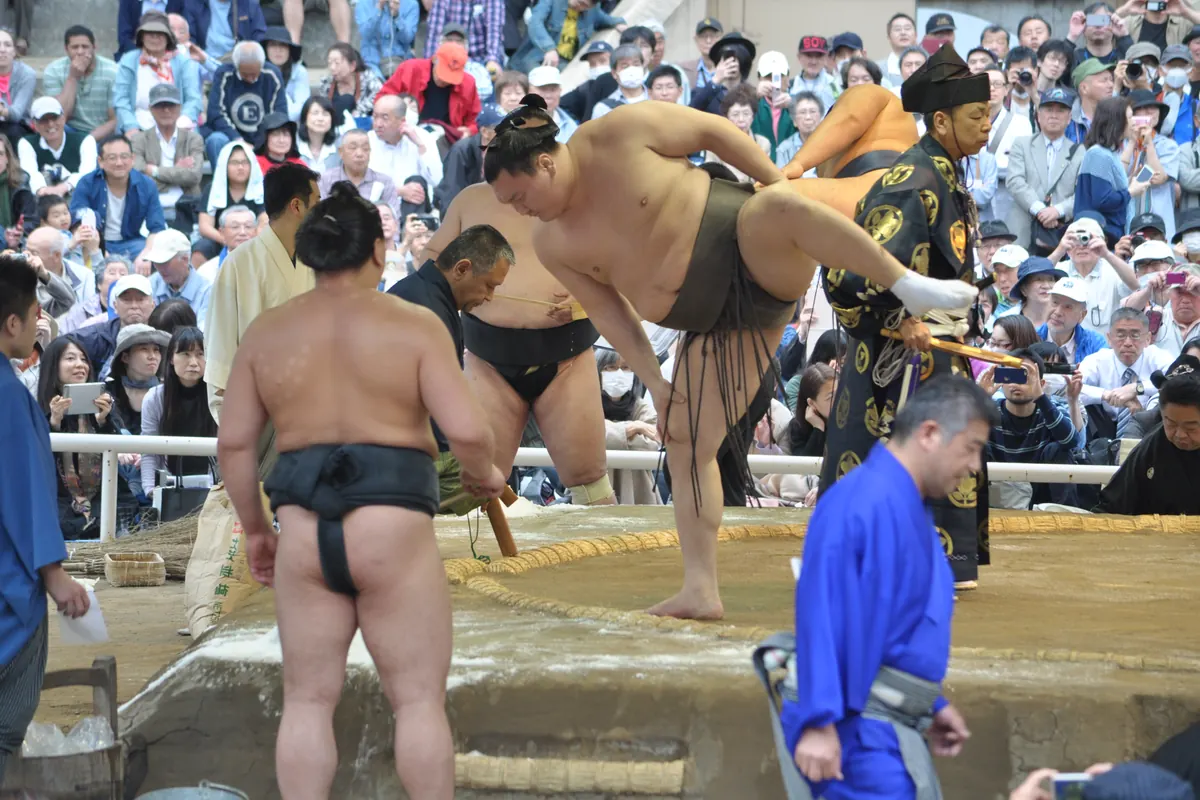
Shiko is a sumo exercise in which each leg is lifted as high and straight as possible, then stomped down with force. In training it may be repeated hundreds of times. It is also performed ritually to drive away demons before bouts, and as part of the yokozuna's ring-entering ceremony, according to Wikipedia's glossary.
Salt
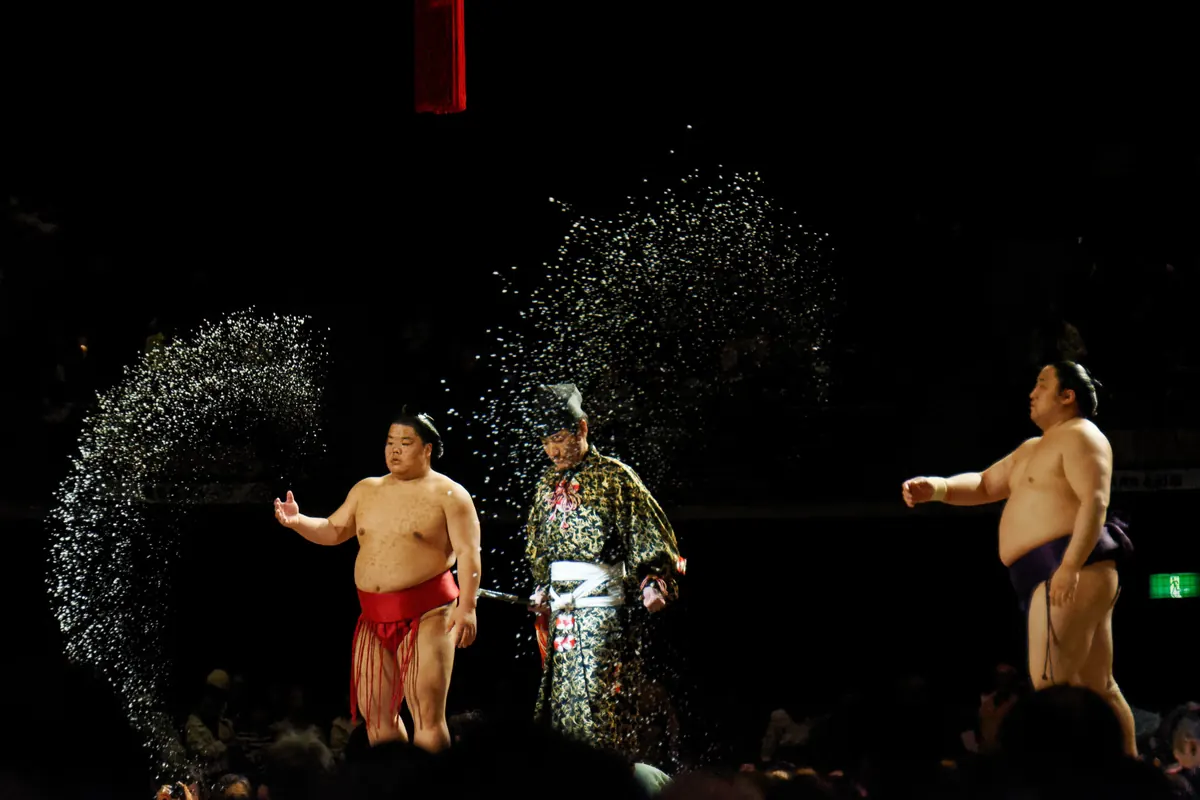
Wrestlers cast handfuls of salt into the ring before a bout. Wikipedia describes this as a symbolic cleansing of the ring, and the glossary says it is believed to cleanse bad energy and guard against injury. An article on sumo's Shinto origins says throwing salt is believed to purify the ring. The salt is supplied by the yobidashi, the ushers who also build and maintain the ring.
Power water and the warm-up
Wrestlers ranked jūryō or above rinse their mouths with chikara-mizu, power water, before a bout, which Wikipedia says is similar to the ritual before entering a Shinto shrine. Then comes shikiri, the warm-up in which the two wrestlers crouch, stare at each other and throw salt. In the top division it can last four minutes, after which the charge, tachi-ai, begins the bout.
The ring-entering ceremony
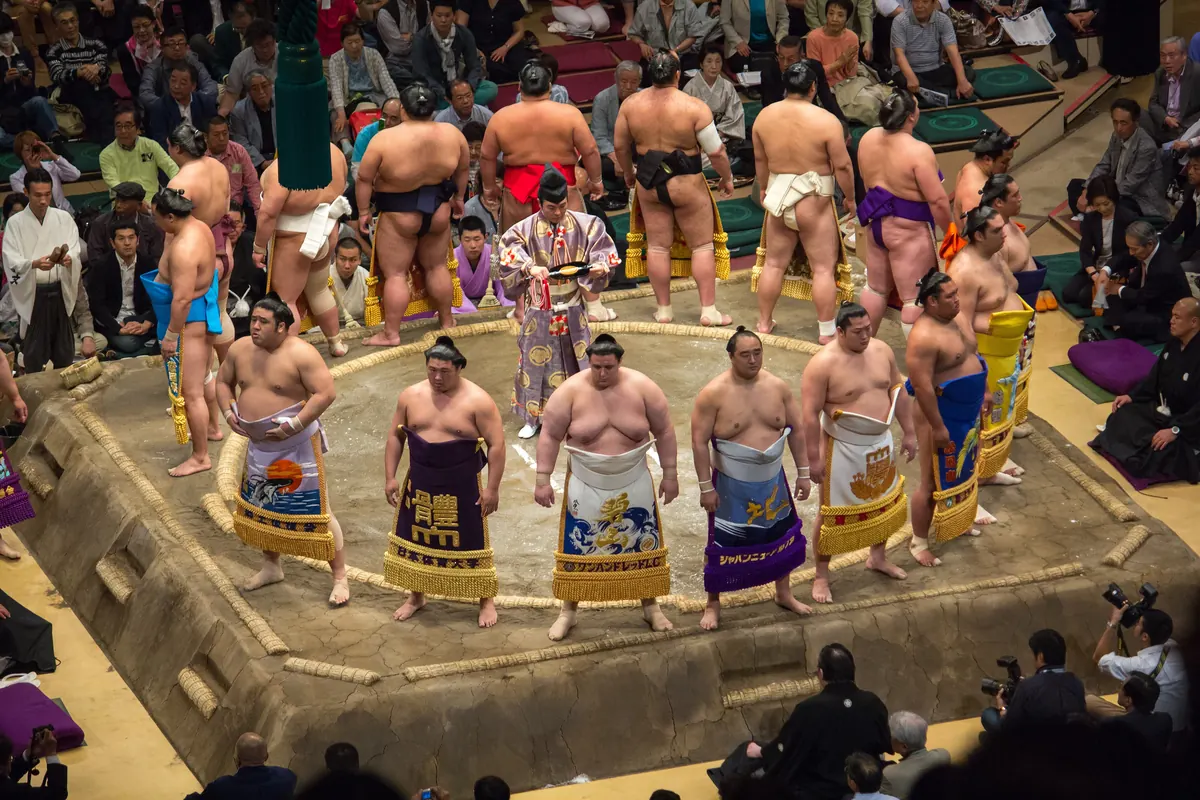
The dohyō-iri is the ring-entering ceremony, performed only by jūryō and makuuchi wrestlers. East and west sides perform in turn, and yokozuna perform their own version. Wikipedia describes the wrestlers' hand-clapping as an important Shinto element, similar to clapping at a shrine to attract the gods' attention. Wrestlers wear elaborate ceremonial aprons, called kesho-mawashi, for it.
The ring
The dohyō is a raised pedestal of clay, with a circle 15 shaku, about 4.55 metres, across, marked out by rice-straw bales partly buried in the clay and covered with sand. The yobidashi build a new ring before each professional tournament, a job that takes three days. Wikipedia says the ring is still considered sacred, and that a ceremony purifies and consecrates it and invites the kami to watch.
The referee's robes
The referee, the gyōji, wears garb very similar to a Shinto priest's, and his black hat is a copy of priests' hats seen in Heian-period art. In the ring-blessing ceremony, dressed in white priestly robes, the gyōji bury salt, kelp, dried squid and chestnuts at the ring's centre. The suspended roof over the ring is also in the style of a Shinto shrine.
Who this isn't for
If you only want to see who wins, the rituals can feel like delay, and a show will not trim them. In the Shinjuku show the organiser names shiko and salt throwing as rituals you will see, and an MC explains them, which is the point of the format. It is not a replay of a tournament's full ceremonial cycle.
Frequently asked questions
Why do sumo wrestlers throw salt?
To cleanse the ring. Wikipedia calls it a symbolic cleansing, rooted in Shinto purification.
What is shiko?
A sumo exercise in which each leg is raised high and stomped down. It is also performed ritually to drive away demons before bouts.
Why is the ring considered sacred?
Sumo grew out of Shinto ritual, and the ring is consecrated in a ceremony that invites the kami to watch.
Who builds the ring?
The yobidashi, the ushers who also announce wrestlers. They build a new ring before each professional tournament.
Do shows include these rituals?
The Shinjuku show names shiko and salt throwing. An MC explains them as they happen.
Sources